
The Official HVAC Operator Playbook , Lead Smarter with Digital Efficiency
Get Instant Access , USD 49.99
Instant PDF Download | 30-Day Money Back | Lifetime Updates
This guide is NOT about watching a little dot move across a map, it is about architecting an automated system that stops your profit from evaporating through a tailpipe.
Master Your Margins
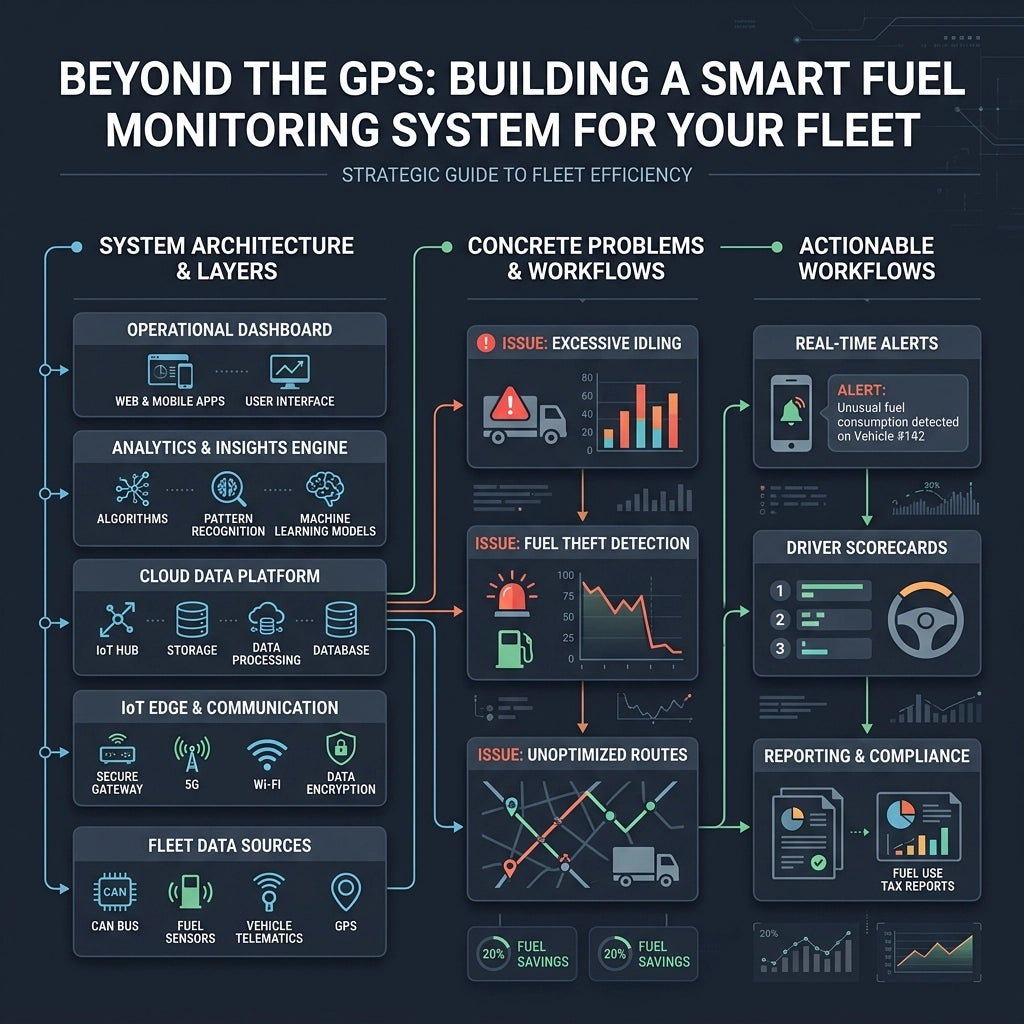
For the modern HVAC operator, fuel isn't just an expense, it’s a leak. You pay for the gas, you pay for the tech's time, and you pay for the wear and tear. Most companies think a basic GPS "track and trace" system is enough. It isn’t. A basic GPS tells you where your van is; a smart fuel monitoring system tells you why your money is disappearing.
To scale an HVAC business without the chaos, you need to move past "tracking" and into "Intelligence." Using the Atlas Method, we can turn a fleet of white vans into a data-driven execution machine.
The Profit Leak: Three Ways You’re Losing Money Right Now
You’re pulled in every direction. Between emergency calls and part shortages, the fleet is often the last thing on your mind, until you see the monthly fuel bill.
The Idling Black Hole: Your techs are running the AC in the van while doing paperwork or eating lunch. 60 minutes of idling can burn half a gallon of fuel. Across 10 vans? That’s a mortgage payment every month.
The Zig-Zag Route: Without a unified intelligence layer, your dispatching is reactive. Your techs are crossing paths on the highway, burning miles and time that should have been spent on a billable job.
The Mystery Siphon: Fuel shrinkage is real. Whether it’s "side jobs" or actual theft, if you aren't matching fuel card swipes to actual tank levels, you’re just guessing where the gas went.
Building the Four-Layer Fuel Engine
To solve this, we don't just buy a gadget. We implement the Atlas Method, the same framework found in Comfort Zone: The HVAC Operator AI Playbook.
1. The Thinking Layer: Your Business DNA
Before you touch a sensor, you have to code your business logic. What is an acceptable idle time? Which routes are high-priority? The Thinking Layer is where you decide that a 10% reduction in fuel consumption is a non-negotiable KPI. You are setting the "rules of the game" for your AI to follow.
2. The Intelligence Layer: Real-Time Data
This is where your fuel monitoring system lives. It’s the hardware and software that feeds the beast.
Fuel Level Sensors: High-accuracy probes that measure exactly how much liquid is in the tank.
Telematics Integration: Connecting the engine's computer to your cloud.
IoT Aggregators: Merging GPS location with fuel flow.
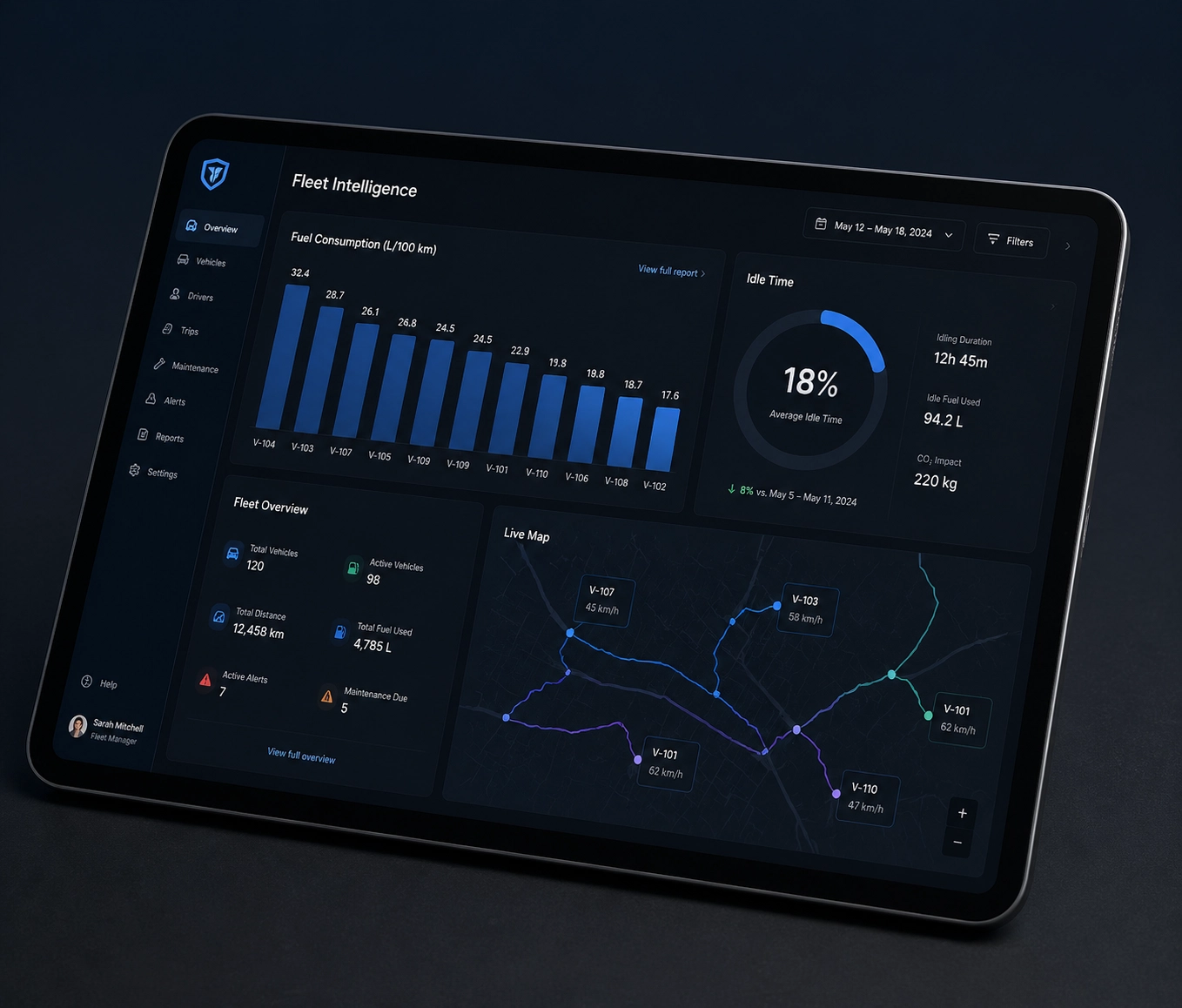
3. The Insight Layer: The Digital Chief of Staff
Data is noise until it’s analyzed. The Insight Layer takes the raw numbers from your fuel monitoring system and flags anomalies. It says, "Hey Akshay, Van #4 used 20% more fuel than Van #2 on the same route." This is how you move from data to decisions. Read more about building the insight layer here.
4. The Execution Layer: The AI Flywheel
Now, we act. The system automatically alerts the driver to turn off the engine. It reroutes the tech in real-time to avoid traffic. It reconciles fuel receipts with tank levels instantly. This is the Execution Layer in action, scaling impact without you needing to micromanage every driver.
Traditional Tracking → Smart Fuel Intelligence
Map dots → Behavioral data
Monthly reports → Real-time alerts
Manual reconciliation → Automated audit
Reactive dispatching → Predictive routing
"Guessing" fuel costs → 99% accuracy
Why Most HVAC Companies Are Treading Water
Most owners buy a GPS tracker, look at it once a week, and wonder why their margins haven't moved. They are building a "house of cards" by adding tools without a framework. AI-assisted is not the same as AI-enabled.
A smart fuel monitoring system isn't a tool, it's a component of your Intelligence Layer. When you integrate it properly using the Atlas Method, it stops being a "cost" and starts being a "revenue generator."
The Numbers That Matter
| 15%+ | < 1 Month |
|---|---|
| Average Fuel Savings | Typical ROI Period |
| 100% | 30-Day |
|---|---|
| Audit Transparency | Money Back Guarantee |
5 Steps to Implement a Fuel Monitoring System
Audit the Fleet: Identify which vehicles are your highest burners.
Install Digital Dipsticks: Upgrade from standard GPS to high-precision fuel sensors.
Sync the Data: Connect your fuel card provider to your fleet management software.
Automate Alerts: Set thresholds for "Sudden Drop" or "Excessive Idling."
Review the Insights: Use your "Digital Chief of Staff" to identify coaching opportunities for drivers.

Is This For You?
| You're ready if... | You're looking for... |
|---|---|
| ✔ You want to stop "guessing" your margins | ✘ A magic button that fixes bad drivers |
| ✔ You're ready to treat fuel as a data point | ✘ Just another monthly subscription to ignore |
| ✔ You want to scale without adding more managers | ✘ To micro-manage your team manually |
| ✔ You value 100% operational transparency | ✘ A "set it and forget it" without logic |
| ✔ You're ready to invest in the Atlas Method | ✘ A cheap tracker from a big-box store |
Frequently Asked Questions
Is a fuel monitoring system hard to install?
No! Most modern systems are plug-and-play with your vehicle's OBD-II port, though high-accuracy sensors might require a professional tech. Once the hardware is in, the AI does the heavy lifting.
Does this really work for small fleets?
Absolutely. In fact, small fleets feel the "fuel sting" even more. Saving $300 a month per van is the difference between hiring a new tech and staying stagnant.
What makes this different from regular GPS?
Regular GPS tells you where you are. This system tells you how much money you’re burning to be there. It’s the difference between a map and a financial statement.
What is the format of the Playbook?
It is a high-resolution PDF designed for quick reading and immediate implementation. You get it the second you buy it.
Stop Managing Harder
You can spend your life staring at gas receipts and arguing with techs about idling time, or you can build a system that handles it for you. The difference between a struggling HVAC shop and a high-performance operation is the quality of their Intelligence Layer.
Harder vs. Smarter
The strategic work keeps getting pushed to "later" while your profit leaks out of your fleet every single day. You don't need more vans; you need a more efficient way to run the ones you have.
Start Building Your Intelligence Layer
This guide shows you how.
One-Time Payment
USD 49.99
- Complete Atlas Method Framework Included
- Fuel Optimization Checklists Included
- AI Prompt Library for Fleet Managers Included
- Lifetime Updates Included
Get Instant Access
100% protected secure checkout.